Hail is the most-claimed and most-misdiagnosed damage on a Clarksville roof
Montgomery County takes hail most springs. Real hail damage to asphalt shingles is specific and recognisable, and plenty of what gets called hail damage is blistering, manufacturing defect or ordinary ageing. You deserve to know which one you have before you put a claim on your record.
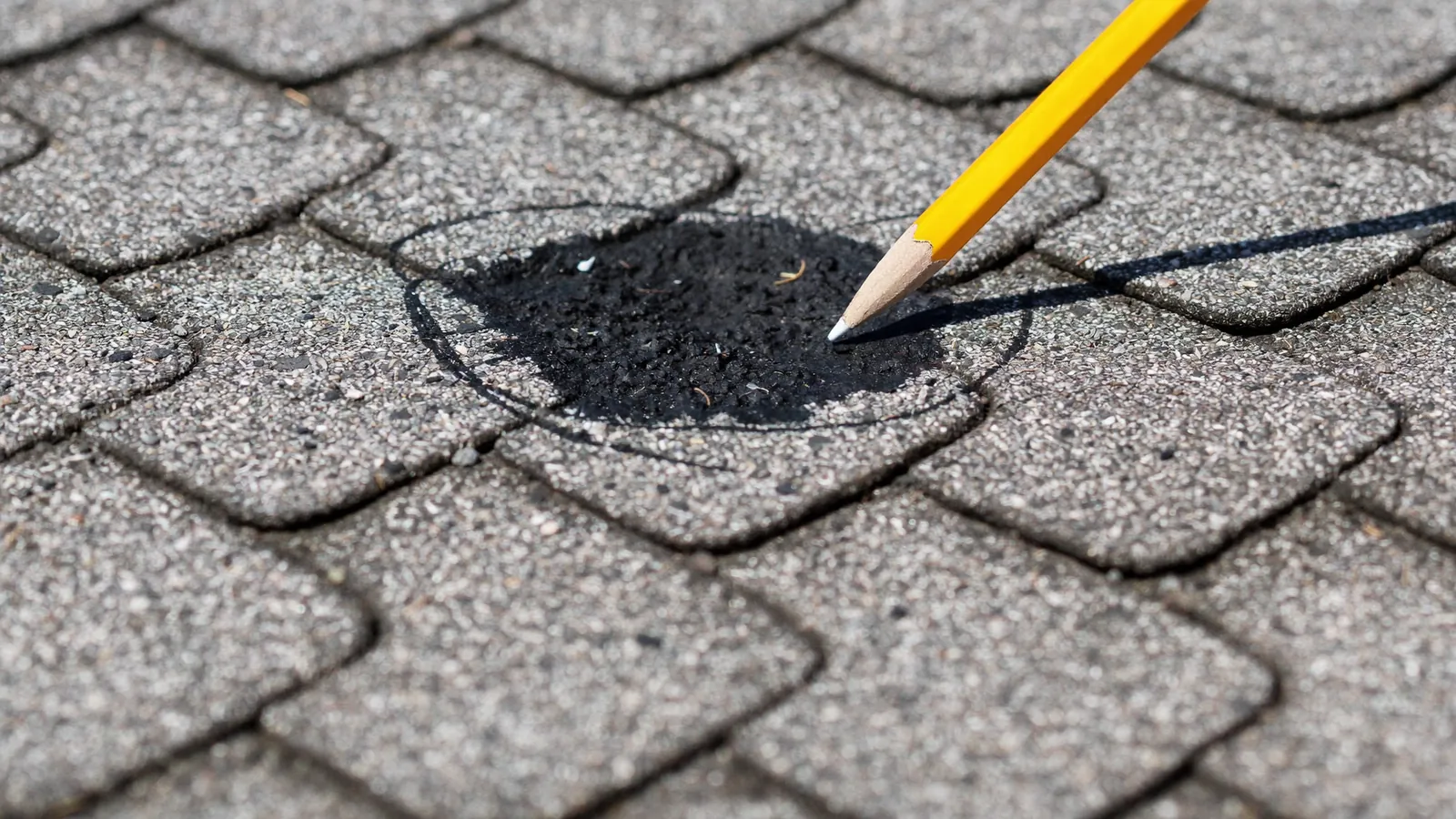
Functional hail damage to an asphalt shingle looks like this: a roughly circular impact mark, random in placement, where the granules have been knocked away to expose the black asphalt mat beneath, and where the mat itself is soft or bruised when you press it with a thumb — the feel is often compared to a fresh bruise on fruit. The softness matters more than the appearance, because it indicates the fibreglass mat has been fractured. A fractured mat means the shingle's waterproofing life is shortened whether or not it leaks today, and that is the basis of a legitimate claim. Hail also marks soft metal: look at the gutters, the downspouts, the vent caps, the ridge vent and any metal flashing, where dents are easier to see than on shingles and help establish the storm's severity and direction.
What is not hail damage, and gets called it regularly: blistering, which looks like small pocks but is caused by trapped moisture or gas in manufacture and tends to be evenly distributed rather than random, with no bruising underneath. Granule loss from age, which is gradual, heaviest in the water courses, and leaves no soft spot. Mechanical damage from somebody walking the roof badly or a satellite installer. Algae streaking, which is cosmetic and common in this humidity. And normal weathering on a twenty-year-old roof, which is not an insured event however much anybody wishes it were.
Carriers also distinguish between functional and cosmetic damage, and some Tennessee policies now specifically exclude cosmetic hail damage on shingles where the shingle still performs. That exclusion is worth finding on your declarations page before you file rather than after. So are the two terms that decide what you actually get paid: whether your wind and hail deductible is a flat dollar amount or a percentage of the dwelling coverage — a 2 percent deductible on a $300,000 home is $6,000 — and whether the roof is covered at replacement cost or actual cash value. Carriers increasingly move roofs beyond about fifteen years onto actual cash value, which pays what the old roof was worth after depreciation and can be dramatically less than what a new one costs.
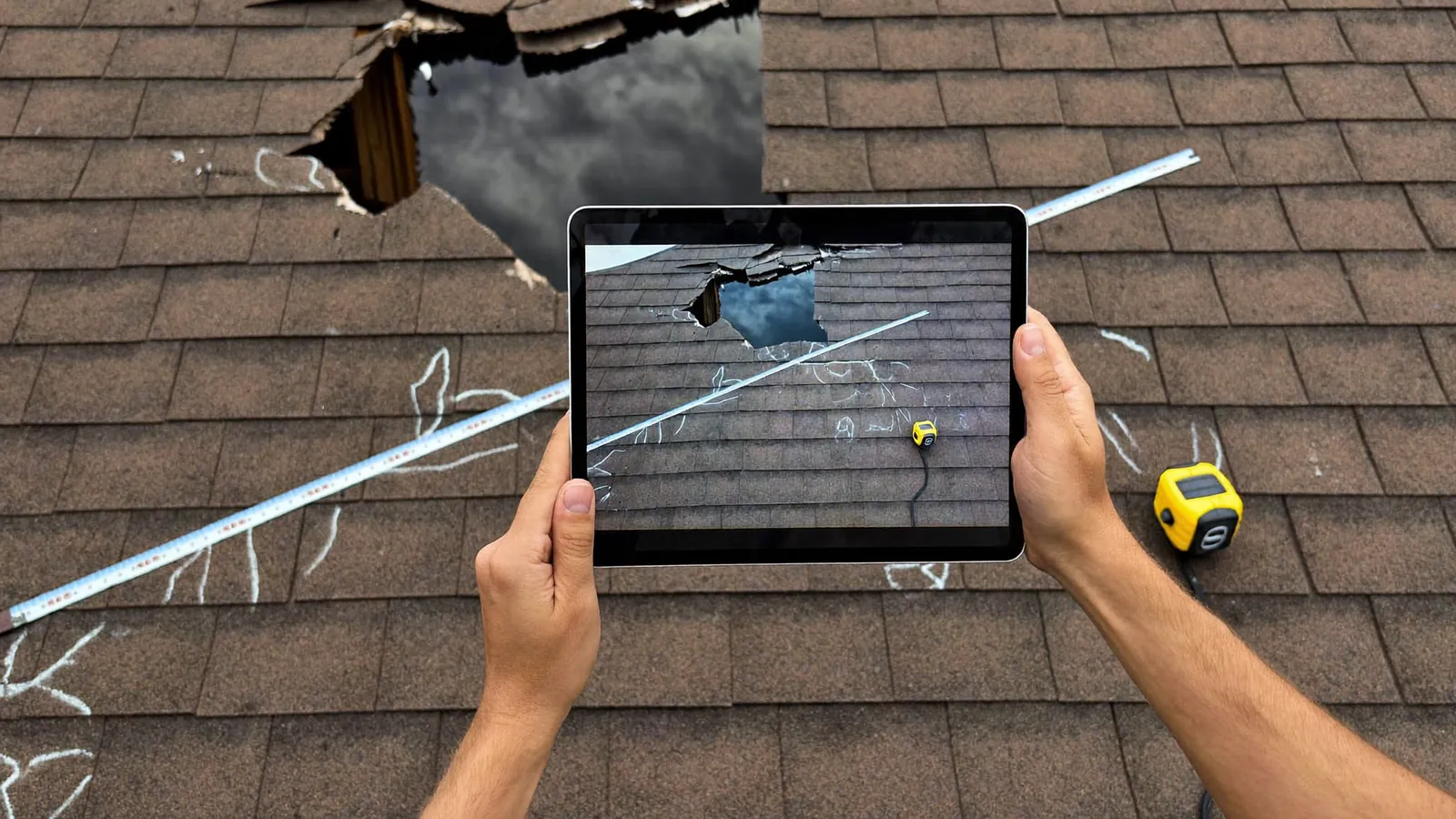
So our inspection ends with a straight answer, and sometimes that answer is no. We will tell you that the marks on your shingles are blistering, that the granule loss is age, that there is nothing here a carrier will pay for, and that you should not file. That costs us a job and saves you a claim. When there is real damage, you get photographs with a scale in frame, the test-square counts an adjuster works from, a note of the metal damage, and the storm date — before you make the call, so you are not relying on somebody else's version of what is up there.
What's included
Bruising checked by hand
Impact marks pressed to find a soft mat, because a fractured mat is what makes hail damage functional rather than cosmetic.
Test squares, properly counted
Damage counted in marked ten-by-ten test squares per slope, which is the format an adjuster is trained to work from.
Soft metal documented
Gutters, downspouts, vent caps, ridge vent and flashing photographed, because dented metal corroborates the storm when shingles are ambiguous.
The difference named
Blistering, age-related granule loss and mechanical damage identified as such rather than written up as hail.
Storm date matched
The damage related to a dated storm event, which is what a carrier needs to connect cause to loss.
Told when not to file
If what is up there will not support a claim, we say so plainly and you keep your claim history clean.
Hail damage roof repair cost in Clarksville, TN
| Job | Typical price | Notes |
|---|---|---|
| Hail inspection with photographs and test squares | Free | Including an honest no when it is a no |
| Written hail damage report for a carrier | Free with inspection | Photographs, counts, storm date |
| Replace hail-damaged shingles, small area | $300 – $1,200 | Where damage is isolated |
| Slope replacement | $1,500 – $4,000 | Where one elevation took the storm |
| Ridge vent and vent cap replacement | $300 – $900 | Commonly damaged, commonly missed |
| Gutter and downspout replacement after hail | $1,000 – $3,000 | See gutters |
| Full replacement, architectural shingles | $6,700 – $15,000+ | The usual outcome on an approved hail claim |
| Impact-resistant shingle upgrade | Quoted on site | May earn a premium discount; ask your agent |
These are 2026 ranges for Clarksville and Montgomery County, meant for budgeting rather than quoting. Pitch, the number of layers to come off, the condition of the decking and the flashing details all move the number. You get the scope and the price in writing after the inspection, and the inspection is free.
Recent work
Questions we get about hail damage roof repair
How do I tell hail damage from normal wear?
Hail impacts are random in placement, roughly circular, and the mat underneath is soft when pressed. Age-related granule loss is gradual, concentrated where water runs, and firm underneath. Blistering is evenly spread and has no bruising. From the ground you cannot reliably tell any of them apart, which is the whole reason for a free inspection before you call your carrier.
My neighbour got a new roof. Why not me?
Hail falls in narrow, irregular swathes, and it is entirely normal for one side of a street to be hit and the other not — and for one elevation of a house to be damaged while the others are clean. It also depends on your roof's age, your shingle, your policy terms and your deductible. A neighbour's approved claim is a reason to have yours looked at, not evidence that you have damage.
What does cosmetic damage mean on my policy?
Some Tennessee policies now exclude hail damage that marks a shingle without affecting how it sheds water. If yours has that exclusion, marks without a bruised mat will not be paid. It should be on your declarations page or in the endorsements. Find it before you file, and ask your agent to explain it in plain terms if the wording is not clear.
What is the difference between ACV and replacement cost on a roof?
Replacement cost pays what it costs to put a new roof on today, usually in two payments with the depreciation released once the work is done. Actual cash value pays that figure minus depreciation for the age of the roof, and that is all you get. Carriers increasingly move roofs past about fifteen years onto actual cash value, which can leave a very large gap between the cheque and the job. Check which one you have before a storm, not after.
Can hail damage be repaired instead of replacing the roof?
Sometimes. Isolated damage on one slope of a relatively young roof can be repaired. Widespread bruising across multiple elevations generally cannot be, because the mat has been compromised across the roof and patching it leaves you with a roof that fails in pieces over the following years. The test-square counts are how that judgement is made and documented.
Should I get impact-resistant shingles?
They are worth considering here, and some carriers offer a premium discount for a rated impact-resistant shingle — ask your agent before you choose, because the discount varies and it affects the maths. They cost more up front. In a county that takes hail most springs, that can pay back over the life of the roof, but it depends on your carrier's position and we will give you both numbers rather than push you to the dearer one.