The cheapest thing you can do for a shingle's lifespan is give the attic air
A Clarksville attic in August sits under ninety-degree sun with a dark roof above it. If air cannot move through, it bakes the shingles from underneath, and a twenty-five-year product finishes at eighteen. Ventilation is unglamorous, it is comparatively cheap, and it is the detail most often left alone.
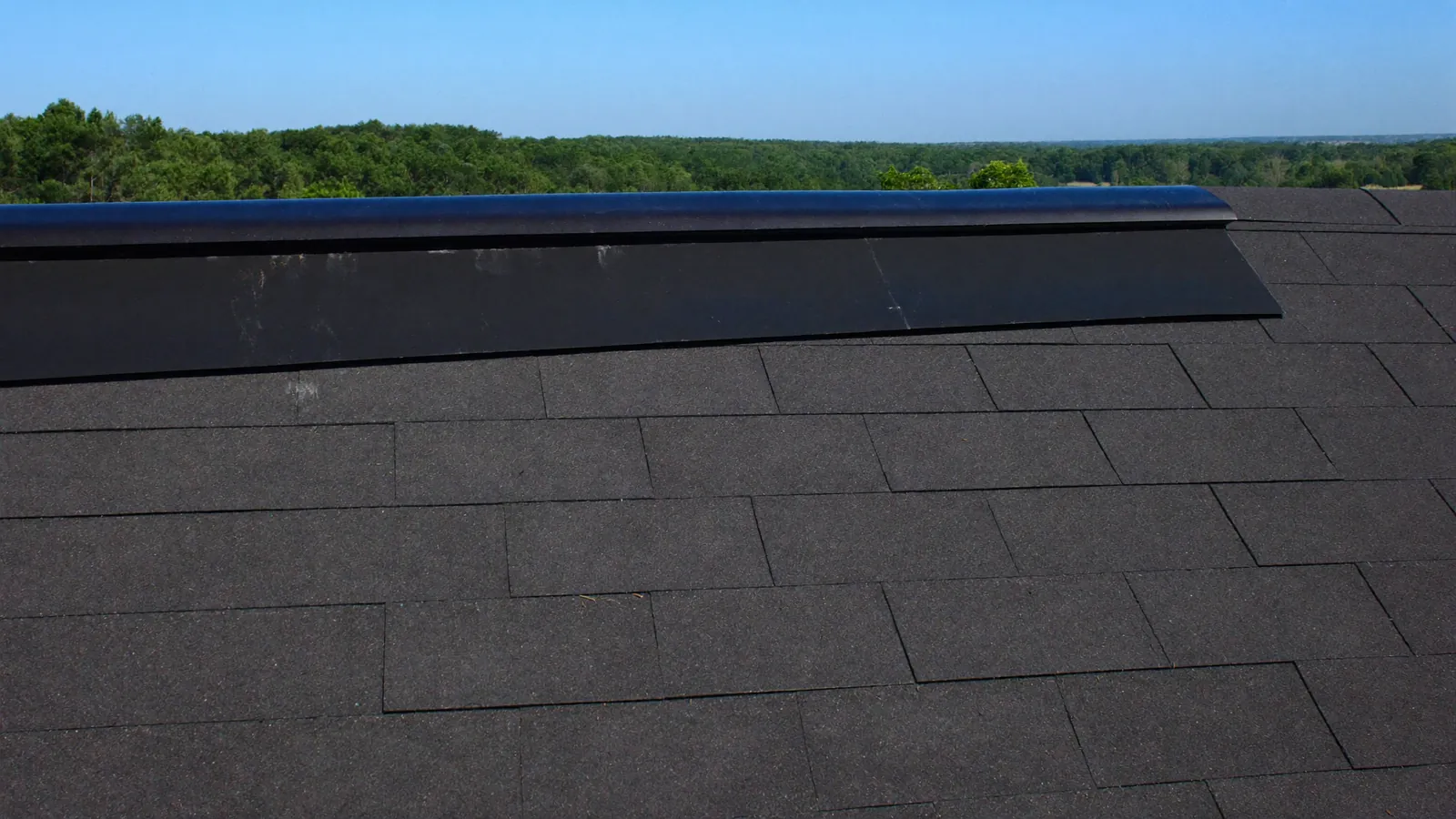
Ventilation is a pair, not a part. This is the thing most homeowners have not been told. A roof needs intake low down — almost always vented soffit at the eaves — and exhaust high up, usually a continuous ridge vent. Air enters cool at the eaves, rises as it warms, and leaves at the ridge. Fitting a ridge vent without adequate soffit intake does very little, because there is nothing for it to pull; it may even draw conditioned air up out of the house through ceiling gaps. A great many Clarksville houses have a perfectly good ridge vent above soffit vents that are blocked solid with blown insulation, painted shut, or were never cut in at all. That is the commonest ventilation fault we find, and baffles at the eaves to hold the insulation back are often the entire fix.
What it costs you when it is wrong. Three things. First, shingle life: sustained high deck temperatures accelerate the ageing of asphalt, and in a climate with ninety-degree summer highs across four or five months that is a meaningful share of the roof's lifespan. It is also why manufacturer warranties generally require adequate ventilation, and why a warranty claim can be refused when there is none. Second, winter moisture: warm damp air from the house that cannot escape condenses on the cold underside of the sheathing, drips, and produces staining that looks exactly like a roof leak but appears in cold weather rather than during rain. Third, cooling cost: a superheated attic makes the ductwork and the ceiling below work harder all summer.
Do not mix exhaust types. Combining a ridge vent with powered fans, or with box vents, on the same attic space is a common mistake that makes things worse rather than better. Instead of drawing air from the soffits, the high-capacity exhaust takes the easy route and pulls from the other roof vent, short-circuiting the loop so that most of the attic gets no airflow at all. If a ridge vent goes on, the other exhaust openings on that space should generally be closed off. Any contractor who adds a powered fan to a roof that already has a working ridge vent is not helping you.
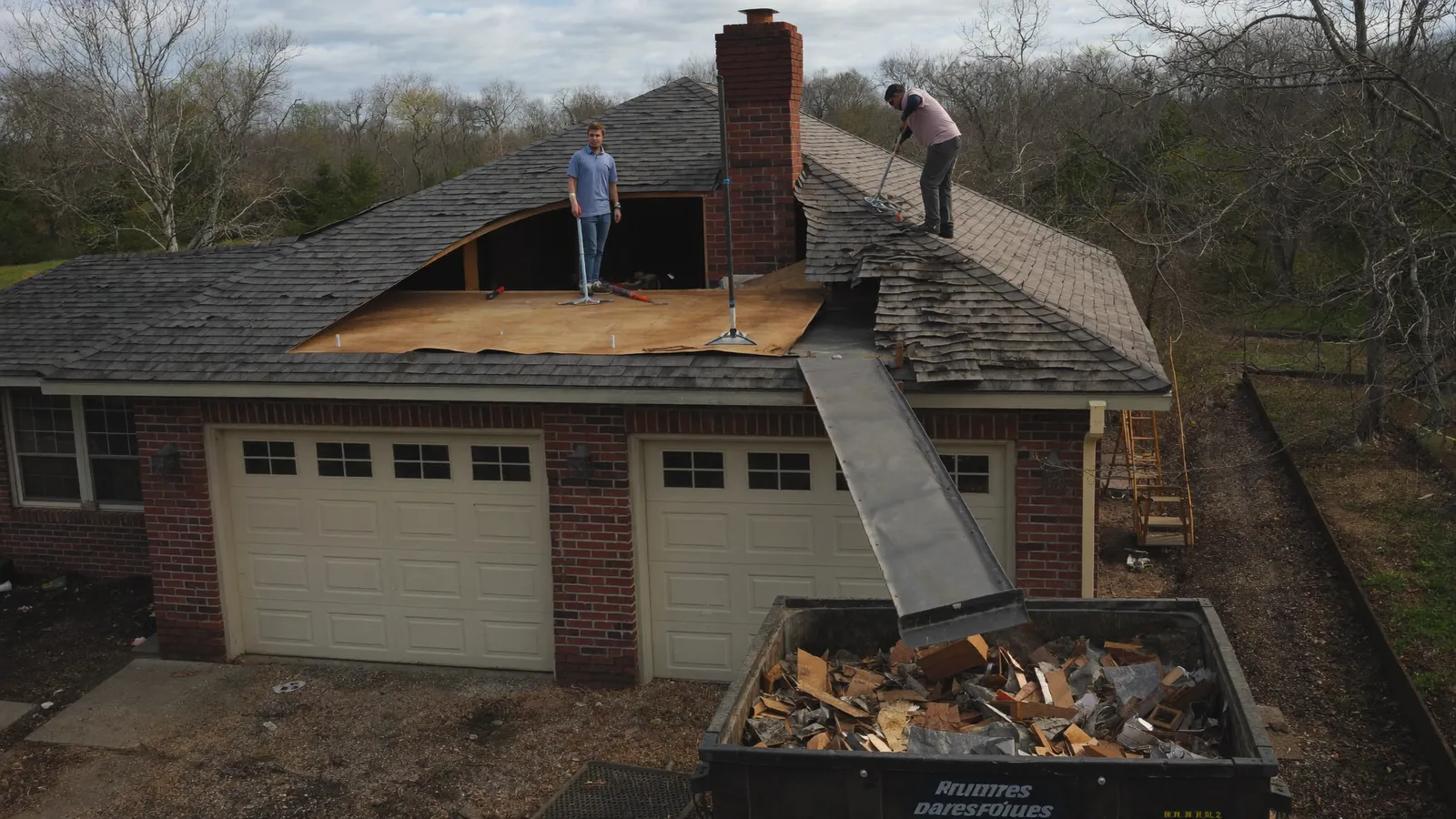
The right time is during a re-roof. Cutting a ridge vent, adding baffles and correcting intake is straightforward while the roof is open and the crew is already there. Doing it as a separate job later costs more and achieves the same thing. If you are getting a replacement quote from anybody and ventilation is not mentioned in it, ask why.
What's included
Intake and exhaust balanced
Both halves addressed, because a ridge vent with blocked soffits does very little and can pull air from inside the house.
Soffit vents actually opened
Blocked, painted or insulation-stuffed intake cleared and baffled so air can genuinely get in at the eaves.
Continuous ridge vent
Cut and fitted along the ridge with the cap shingles over it, which outperforms scattered box vents.
Mixed exhaust corrected
Competing vent types on one attic space closed off, so the airflow loop runs eaves to ridge instead of short-circuiting.
Winter condensation checked
Staining on the underside of the deck identified as condensation rather than misdiagnosed and re-shingled.
Done during the re-roof
Fitted while the deck is open, which is the cheap moment to do it and the one most often skipped.
Attic ventilation cost in Clarksville, TN
| Job | Typical price | Notes |
|---|---|---|
| Ventilation assessment with the roof inspection | Free | Attic checked where accessible |
| Ridge vent installation during a re-roof | $400 – $1,200 | The usual and cheapest moment |
| Ridge vent as a standalone job | Quoted on site | More than doing it with a roof |
| Soffit vent cutting and baffles | Quoted on site | Often the whole fix on its own |
| Vented soffit replacement | Quoted on site | See soffit and fascia |
| Closing off redundant box vents | Included with ridge vent | Prevents short-circuiting |
| Attic fan removal | Quoted on site | Where it competes with a ridge vent |
| Static vents where a ridge vent will not work | Quoted on site | Short or complex ridges |
These are 2026 ranges for Clarksville and Montgomery County, meant for budgeting rather than quoting. Pitch, the number of layers to come off, the condition of the decking and the flashing details all move the number. You get the scope and the price in writing after the inspection, and the inspection is free.
Recent work
Questions we get about attic ventilation
How do I know if my attic ventilation is inadequate?
Signs you can check yourself: an attic that is brutally hot in summer rather than just warm, dark staining on the underside of the roof sheathing, rusty nail points, damp or matted insulation, and shingles that have aged noticeably faster on one part of the roof. From outside, look along the eaves — if you cannot see vented soffit, or the vents look painted over, the intake side is probably the problem.
Will a powered attic fan fix it?
Usually not, and it often makes things worse. If the soffit intake is inadequate, a powered fan pulls air from the easiest available source, which may be your conditioned living space through gaps around light fittings and the attic hatch. If you already have a working ridge vent, adding a fan short-circuits the airflow. Fix the intake first; that is almost always the actual problem.
Is a ridge vent better than box vents?
Generally yes, because it exhausts continuously along the highest line of the roof where the hottest air collects, rather than at a few points. It also looks tidier. The exception is a roof with very little ridge length or a complex shape, where there is not enough ridge to work with and static vents are the sensible answer. The important thing is not mixing the two on one attic space.
Does ventilation really affect how long my shingles last?
Yes, and in this climate noticeably. Sustained high deck temperatures age asphalt faster, and Clarksville runs above ninety degrees for a large part of the summer. It is also a warranty issue: most manufacturers require adequate ventilation, and a claim can be refused without it. It is one of the cheapest things on a roofing estimate and one of the most consequential.
I have stains on my attic sheathing. Is that a leak?
It might be condensation rather than a leak, and the pattern tells you which. A leak produces staining concentrated near a penetration or a flashing detail and appears during rain. Condensation produces more widespread staining across the underside of the deck and is worst in cold weather. Getting that diagnosis right matters, because the fix for one is roofing and the fix for the other is ventilation at a fraction of the cost.
Can you add ventilation without replacing the roof?
Yes. Soffit intake work, baffles and closing off competing vents can all be done independently, and on many houses the intake side alone is the whole problem and the whole fix. Cutting a new ridge vent on an existing roof is possible but costs more than doing it during a replacement, so if a re-roof is a few years out it may be worth waiting and doing it then.