Low-slope roofs fail differently, and shingles were never the answer for them
Flat is really low-slope, and it needs a membrane rather than shingles. In Clarksville that means commercial buildings, a lot of additions and porch roofs on houses, and the occasional modern build. The failure points are seams, flashings and standing water, not missing shingles.
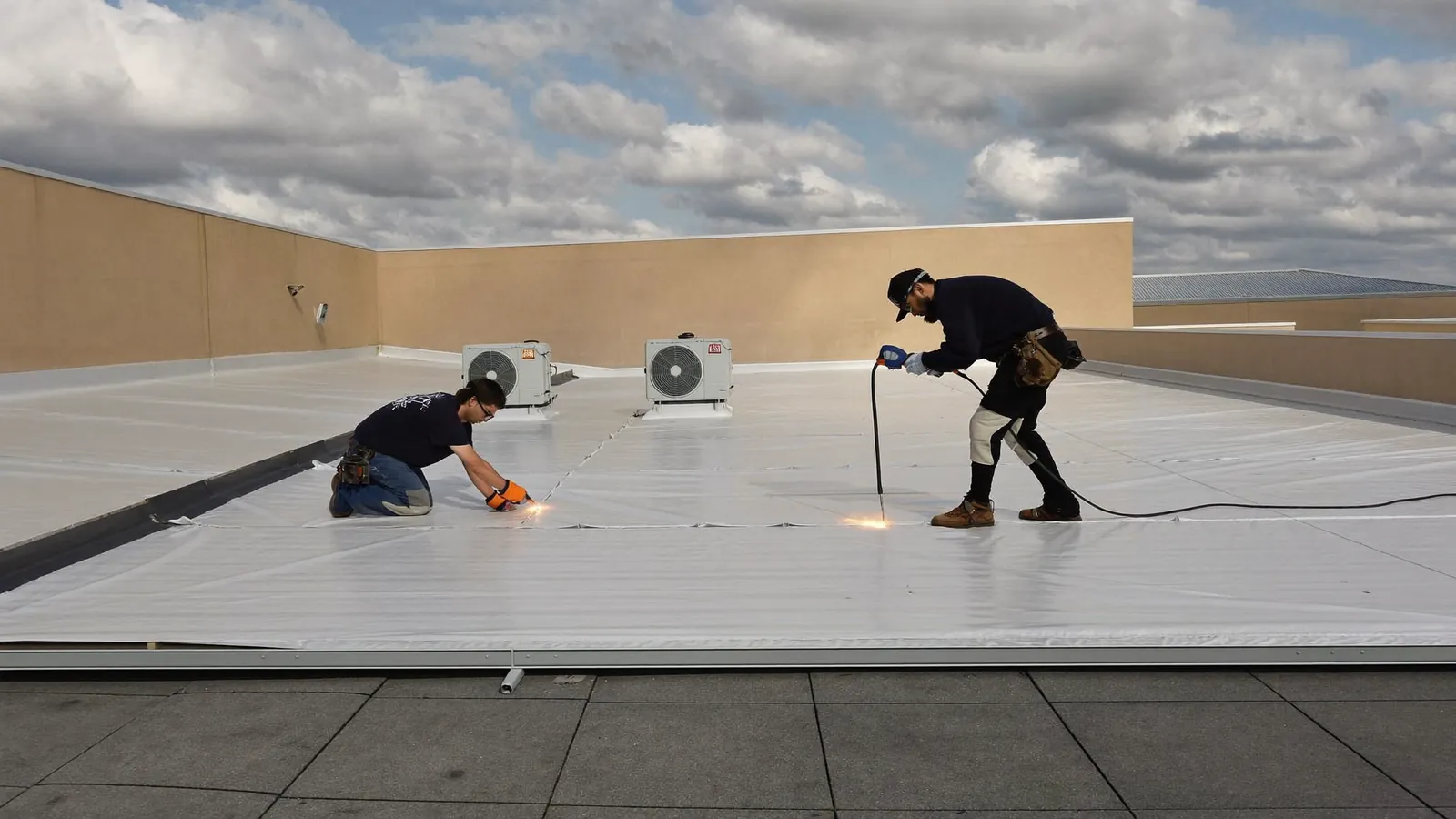
Three systems cover nearly everything here. TPO is a single-ply thermoplastic membrane, usually white, heat-welded at the seams. The white surface reflects heat, which is a real benefit on a Tennessee summer roof, and welded seams are strong. It is the most common choice on new commercial low-slope work. EPDM is a synthetic rubber membrane, typically black, with seams bonded by tape or adhesive. It is durable, it has a long track record, and it is forgiving to repair. Modified bitumen is an asphalt-based membrane in rolls, torch-applied or self-adhered, often in two plies. It is tough underfoot, which makes it a sensible choice where people walk on the roof for equipment access.
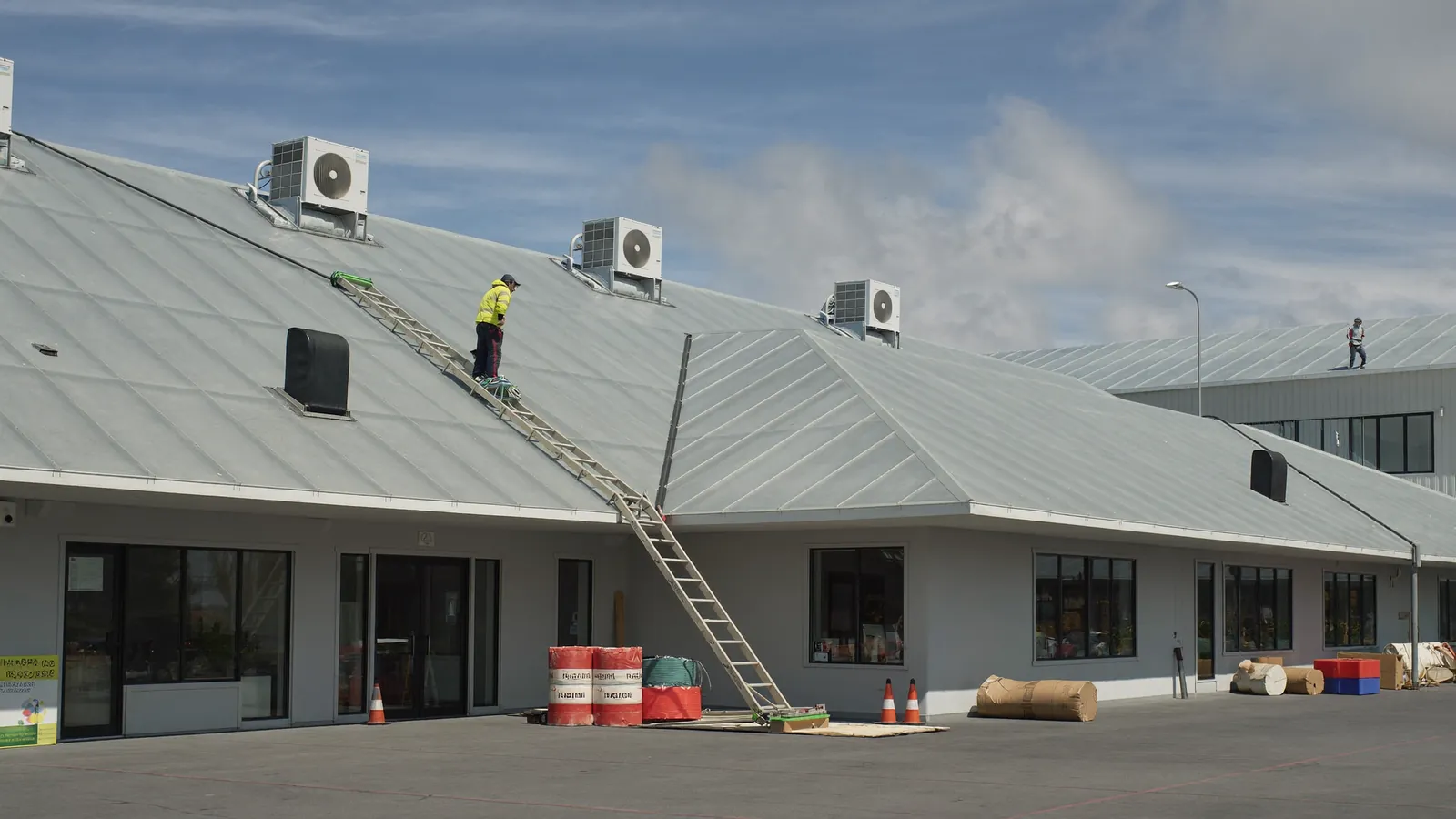
What actually goes wrong. Field membrane rarely fails first. Seams do, flashings do, and penetrations do. On a commercial roof the usual culprits are the curbs around rooftop HVAC units, the pitch pockets around pipe and conduit penetrations, the termination bar where the membrane meets a parapet, and the drains. Standing water is the other one: a low-slope roof is designed to drain, not to hold water, and ponding that sits for more than a day or two after rain is a sign that either the slope was never right or the insulation has compressed. In a county with fifty-one inches of annual rainfall, ponding is not a theoretical problem.
Residential low-slope. A great many Clarksville houses have a low-slope section — a rear addition, a porch roof, a carport, sometimes a dormer detail — and a surprising number of them have shingles on them, because somebody treated the whole roof as one job. Asphalt shingles need slope to shed water; below the manufacturer's minimum pitch they will leak, and no amount of sealant changes that. If you have a persistent leak on a shallow section and three people have patched the shingles on it, the problem is the material, not the patching. The fix is a membrane, and it is usually not expensive on a small area.
Repair, recover or replace. Not every tired flat roof needs tearing off. A membrane in sound condition with failed seams and flashings can often be repaired for a fraction of replacement. Where the membrane is at the end but the insulation beneath is dry, a recover system can go over the top. Where there is wet insulation — and a moisture survey or test cuts will tell you — it has to come off, because wet insulation does not dry, does not insulate, and will rot the deck underneath. We will tell you which of the three you have and we will not call it a replacement if it is a repair.
What's included
The right membrane for the job
TPO, EPDM or modified bitumen specified for the building and the traffic it gets, not whatever is on the truck.
Seams and flashings first
Curbs, pitch pockets, terminations and drains are where low-slope roofs actually fail, and that is where the inspection concentrates.
Ponding addressed
Standing water traced to slope or compressed insulation and corrected, rather than membrane patched over and over.
Wet insulation found
Test cuts where the roof feels soft, because wet insulation never dries and will take the deck with it.
Shingles taken off shallow slopes
Low-slope sections of houses re-done in membrane, which is the actual fix for the leak three people have patched.
Repair, recover or replace
An honest assessment of which of the three your roof needs, with the reasoning and the photographs behind it.
Flat roofing cost in Clarksville, TN
| Job | Typical price | Notes |
|---|---|---|
| Flat roof inspection with photographs | Free | Test cuts quoted where needed |
| Flat roof repair | $500 – $3,000 | Seams, flashings, penetrations, patches |
| Seam repair, per run | Quoted on site | Welded or taped to match the system |
| Pitch pocket and curb flashing rebuild | Quoted on site | The most common commercial leak |
| Residential low-slope section, membrane | Quoted on site | Porch, addition or carport |
| TPO or EPDM full replacement | Quoted by square footage | Includes tear-off and insulation |
| Recover over sound insulation | Less than full replacement | Only where insulation is dry |
| Moisture survey / test cuts | Quoted on site | Before committing to a recover |
These are 2026 ranges for Clarksville and Montgomery County, meant for budgeting rather than quoting. Pitch, the number of layers to come off, the condition of the decking and the flashing details all move the number. You get the scope and the price in writing after the inspection, and the inspection is free.
Recent work
Questions we get about flat roofing
Why does my porch roof keep leaking when the main roof is fine?
Almost certainly because it has shingles on a slope too shallow for them. Asphalt shingles rely on gravity and a minimum pitch to shed water; below that they let it under the courses, and patching does nothing because the material is wrong for the application. The fix is a proper low-slope membrane on that section, and on a porch-sized area it is rarely a large job.
What is the difference between TPO and EPDM?
TPO is a white thermoplastic sheet with heat-welded seams; EPDM is a black rubber sheet with adhered or taped seams. TPO's white surface reflects heat, which is worth having on a Tennessee roof. EPDM has a long track record and is very straightforward to repair. Both are good systems. The building, the existing roof and the budget decide, and we will explain the choice rather than just name one.
Is standing water on a flat roof normal?
Water during and just after rain is normal. Water still sitting there forty-eight hours later is not, and it is telling you the slope is inadequate or the insulation has compressed into a dish. Ponding accelerates membrane ageing, loads the structure, and in this rainfall it recurs constantly. It is worth correcting rather than living with.
Can a flat roof be repaired or does it all have to come off?
Very often it can be repaired, and that is usually the right call when the field membrane is sound and the problems are at seams, flashings and penetrations. Where the membrane is genuinely at the end but the insulation beneath is dry, a recover goes over the top. Only wet insulation forces a full tear-off, and test cuts establish that rather than guesswork.
How long does a commercial flat roof last?
It depends heavily on the system, the thickness, how much foot traffic it takes and how well the details were done. What shortens one most reliably is neglect: a drain that nobody clears, a seam that opens and goes unnoticed for two winters, equipment contractors walking the membrane without protection. A twice-yearly inspection is cheap and extends the life of a low-slope roof more than any other single thing.
Do you work on churches and small commercial buildings?
Yes. Churches, shops, offices, warehouses and the buildings along the industrial corridors are regular work, and a lot of them have a low-slope roof with rooftop units. See commercial roofing for how we handle scheduling and access around a building that has to keep operating.